
Development
The conventions (style, tests, commit and pull request rules) are in AGENTS.md, which every contributor and coding agent reads first. This page is the longer version: how the pieces fit and how to check a change.
Setup and checks
Section titled “Setup and checks”make setup # Poetry's environment and the web app's packagesmake check # everything CI runs that needs no browser or Postgres: run it before pushingmake pre-push # the quick version (about a minute) for pushes before the lastmake lint # ruff, mypy, import-linter, ESLint and Runway's own Semgrep rulesmake test # the Python tests on SQLite (make test-parallel: across 4 processes, as CI runs them)make frontend-check # type-check, ESLint, Vitest and build for the web appmake docs-build # the documentation site, failing on a broken link between pagesPython goes through Poetry (Python 3.14): poetry run python run.py --no-sync runs Runway without touching your bank, poetry run python -m unittest tests.test_x runs one test module, and poetry add <package> adds a dependency. For the quick checks on every commit (ruff, whitespace, YAML and TOML syntax, merge markers), install pre-commit and run pre-commit install once.
Postgres. CI runs every test on Postgres 16 too, in parallel, where tests that share the database can trip over each other. Run them yourself for a change to the database, the migrations or the tests, against a throwaway Postgres (its data in memory and nothing waiting for the disk; never settings for a real database). Its max_connections needs at least 30 per test process plus 100, and Docker’s default 64 MB of shared memory isn’t enough for the schemas the tests make:
docker run -d --rm --name runway-test-pg --shm-size=1g --tmpfs /var/lib/postgresql/data -p 5432:5432 \ -e POSTGRES_USER=runway -e POSTGRES_PASSWORD=runway -e POSTGRES_DB=runway postgres:16 \ -c fsync=off -c synchronous_commit=off -c full_page_writes=off -c shared_buffers=512MB -c max_connections=600DATABASE_URL=postgresql://runway:runway@127.0.0.1:5432/runway make test-pgdocker stop runway-test-pgA test that writes settings, runs a sync or goes through the server takes a database of its own with own_database(self) from tests/shared.py: on Postgres a schema borrowed from its process’s pool, on SQLite a file. make test-timings prints where the tests’ time goes.
Only in CI: the Postgres suites, the Docker image build, the Verify flows check (below), the security scans (Semgrep’s registry packs, Trivy, zizmor, pip-audit, npm audit, CodeQL) and the independent agent review.
One paved path
Section titled “One paved path”There is one way to do most things, and make lint fails on the old way. Use the helper; where a use is right for a reason, say why on the line (# nosemgrep: <rule id> -- why, // eslint-disable-next-line no-restricted-syntax -- why) rather than switching the rule off.
| Don’t | Use |
|---|---|
urllib.request.urlopen or build_opener outside runway/tls.py |
tls.urlopen |
bool(body…), float(body…) or int(body[…]) in runway/server/api/ |
runway/validate.py |
sa.text(f"…"), or SQL built with +, % or .format |
SQLAlchemy statements, or sa.text(":name") with bound parameters |
a 0.005 literal outside runway/money.py |
money.CENT, money.is_zero, money.same_amount |
date.today() in the sync and provider modules |
the today the caller passes |
datetime.utcnow() |
the local time, or datetime.now(timezone.utc) for another system |
month arithmetic outside runway/dates.py |
dates.add_months, month_start, days_in_month, months_between |
(e as Error).message in the web app |
errMsg(e) from lib/act.ts |
fetch( outside lib/api.ts |
api() |
.catch(() => {}) with nothing in the braces |
a comment saying why the failure doesn’t matter |
| a hand-written list of account kinds | lib/accounts.ts |
The Python rules are in .semgrep/runway.yml, each with a failing and a passing example in .semgrep/examples/; the web app’s are in frontend/eslint.config.js, with their examples in frontend/src/lint-rules.test.ts.
The web app
Section titled “The web app”Svelte 5 and TypeScript in frontend/ (Vite, Tailwind CSS, shadcn-svelte-style components on Bits UI, Lucide icons), built into runway/static/app/, which Runway serves at /. It needs Node 26 (.nvmrc).
cd frontend && npm cinpm run dev # http://localhost:5173/, reloading as you edit (start Runway on 8765 too)npm run check # type-checknpm run lint # ESLint over the web app, the browser extension and the service workernpm test # Vitestnpm run build # into runway/static/app/The phone tab bar
Section titled “The phone tab bar”On a phone MobileNav.svelte draws the navigation as frosted glass: the popover surface at 60% (bg-popover/60) over a 28px backdrop blur with saturate(2); a browser without backdrop-filter gets the solid surface. --tabbar-h in app.css is the distance from the screen’s bottom to the bar’s top.
Both numbers were chosen by measuring, in headless Chromium at 440×956 with the GPU path on (--use-gl=angle --use-angle=swiftshader --enable-unsafe-swiftshader --ignore-gpu-blocklist, so backdrop-filter renders), over every demo page at six scroll positions. The spread of brightness behind a label (text bleeding through the glass) was 4.2 for the first, more transparent version, 2.0 at 50% popover, 1.6 at 60% and 1.3 at 70%; 60% keeps the text behind soft while the blur still shows the page’s colours (70% starts to look like a solid bar), and a brightness(1.1) boost lifted the bleed, so it is dropped.
The inactive labels use --nav-inactive (#b9bec7 in the dark theme), lighter than the shared muted-foreground (#9aa0aa), and used by MobileNav.svelte only. On the first glass muted-foreground measured 3.7:1 at the lowest mean and 3.3:1 at the brightest pixel behind a label, under the 4.5:1 normal text needs; with the 60% surface and #b9bec7 the labels measure at least 7.4:1 on average and 7.1:1 at the brightest pixel. Content brighter than the demo pages could lower these: repeat the measurements over every page at several scroll positions.
The documentation
Section titled “The documentation”Astro Starlight in docs/, published to GitHub Pages by .github/workflows/docs.yml on every push to main that changes it. Each page is Markdown in docs/src/content/docs/, in a folder per sidebar group (start/, using/, reference/, contributing/), with its title, description and order in the front matter. make docs serves it with live reload; make docs-build fails on a broken link between pages.
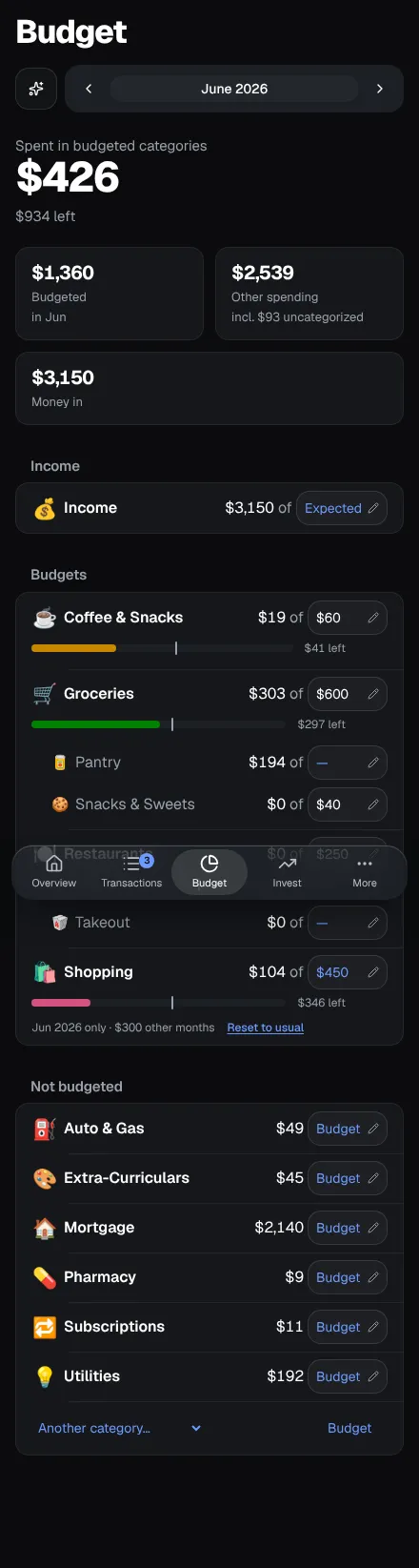
Link to another page by its address, base included: [Configuration](/Runway/reference/configuration/). Screenshots come from screenshots/ (below), never from a picture taken by hand:  from a page, and the same path imported in index.mdx. A change users would notice updates its page in the same pull request.
Verifying a change in the real app
Section titled “Verifying a change in the real app”Unit tests don’t show a layout or a picker working, so a change to the web app is also run in a browser. make verify makes a temporary database, fills it with the demo data (made-up, never yours), starts Runway and drives it with Playwright: each page at phone (440×956, an iPhone 17 Pro Max) and desktop (1280×800) widths, then the scripted flows. It saves a full-page screenshot of each page (<page>-<width>.png), the page’s first screen (<page>-top-<width>.png, for the README and the docs) and each flow’s steps, plus report.json, to artifacts/verify/, and exits non-zero on a console error, an uncaught error, a 5xx, a failed step or a page that never finished loading.
make verify # every page and flowmake verify PAGES="budget setup" # only these pages, and the flows that start on themmake verify PAGES="budget-edit" # only this flow (a flow's name is its file's), or device-cacheVerify the pages you changed with PAGES: a full run takes several minutes, a page a minute or two.
A flow is a small JSON file in frontend/verify/flows/ (the format is in its README.md): open a route, click, fill, wait, screenshot. A pull request that changes the UI adds or edits one. A flow marked signed_in runs against a second demo server with sign-in on, with Chrome’s virtual authenticator standing in for Face ID.
It runs on Linux (the dev container and CI) and needs libfaketime (sudo apt-get install -y libfaketime): the demo data is built relative to today, so the server and the seed run with the clock frozen at the day in runway/verify.py, and the browser’s clock is set to the same day. Each shot also stops endless animations, waits for the page to settle, scrolls to the top, moves the pointer off the page and leaves toasts out, so two runs on the same tree write identical images. There is no tablet width: look at the rail layout (768 to 1023 px) by resizing a browser.
A shot is taken only once nothing on the page is still loading (no skeleton placeholder, nothing aria-busy, no transition still moving, the Investments page’s live prices in) and is then taken a second time: it’s kept when the two are byte for byte the same, retaken when not, and fails after four tries, so a half-loaded page is never kept. A flow’s expect_text and expect_focus checks since its last action are made again after the shot. Transitions and the opening of dialogs, sheets and popovers take no time (a sheet that slid in was otherwise drawn a fraction of a pixel off, differently each run), and the app doesn’t see the window resizing that Chromium does for a full-page capture (it switched a desktop page to the phone layout for a moment, closing a picker or collapsing a row). make verify-twice runs everything twice, on fresh data, and fails on any image that differs.
On a busy machine (several agents on one container), make verify takes care of itself:
- One run at a time per machine: a second one prints
another verify is running on this machine (…), waiting...and starts when the first ends (an hour at most, then it exits 3;RUNWAY_VERIFY_LOCK_WAITin seconds). The lock is/tmp/runway-verify.lock(flock), let go of when its process ends however it ends; a run started underflock /tmp/runway-verify.lock …counts it as its own. - It waits up to ten minutes for the load to drop below 1.5 per CPU before it starts, and stretches every wait’s limit by the load (up to 8 times), since each wait ends as soon as what it waits for is there.
- A page or flow that fails is run again, alone, on a fresh copy of the demo data, up to three times in all, more patiently each time. One that passed only on a retry is listed as
flakyin the summary. - All or nothing: only a run where every page and flow passed puts its images in
artifacts/verify/. A failed run leaves itsreport.json, each failed step’s-FAILED-image and, underunverified/, what it did capture, for looking at, not committing. - The whole output also goes to its own log,
artifacts/verify-logs/verify-<time>-<pid>.log(the path is printed first and last), so don’t redirect it to a fixed file name another run could share.
A failed run ends with a FAIL: line per page or flow, with its first problem (a step that timed out, never settled and what was still loading, a check that no longer held after the screenshot, a console error or a 5xx); the log has each attempt’s full message.
Screenshots in a pull request
Section titled “Screenshots in a pull request”screenshots/ holds every image make verify writes, committed: the visual regression baselines, and the pictures the README and the docs show. A pull request that changes the UI runs
make screenshotsbefore its last push and commits what changed. It’s make verify followed by tools/sync_screenshots.py, which copies the new images in, leaves identical files untouched and removes the ones whose page or flow is gone. It copies nothing unless the whole run passed; make screenshots PAGES="budget budget-edit" updates only those pages’ and flows’ images (removing those that a page or flow it ran no longer writes) and leaves every other page’s and flow’s alone. Never copy images into screenshots/ by hand. The pull request’s Files changed then shows each changed screenshot as an image diff, and the Screenshot diff workflow (tools/screenshot_diff.py) comments on the pull request. The comment starts with View the visual diff, a link to report.html, and keeps a table of the changed pixels below it.
report.html is one self-contained page: every image is inside it, and it makes no network requests. For each changed screenshot it has a header (the path, added, deleted, modified or resized, the changed pixels and their share of the image, the size before and after) and the tabs Diff, Reference, Actual and Slider, a before and after slider you can drag, move with the arrow keys, or drag by touch. An added screenshot shows only Actual and a deleted one only Reference. A screenshot whose height changed shows both images from the top, and its Diff says the dimensions differ and stripes the rows only one of them has. At the top, an index of every image with a filter and a count. Full-page screenshots are tall (up to about 13,000 px), so the page holds the bands of rows around each change (150 rows of context, labelled with their y range, “unchanged rows omitted”) and, while the file stays small, the whole image behind Show all rows. The page is kept under 25 MB: past that it cuts the context, then scales the images down, and says so at the top.
The report is uploaded as an artifact that is not zipped (archive: false), kept 14 days, so GitHub serves the link only to someone logged in to GitHub with access to the repository. If the browser downloads the file instead of showing it, open the saved report.html from your downloads. The raw highlight images and summary.json are in the zipped screenshot-diff artifact of the same run. Nothing is hosted anywhere else. poetry run python tools/screenshot_diff.py --base origin/main --head HEAD --out artifacts/screenshot-diff writes the same files locally (and --dry-run prints just the comment).
Commit every change in the directory, including pages you didn’t mean to touch: an unexpected diff is a leak, or a nondeterminism bug to report. The only images a change ever commits are these (make fleet-checks fails any other raster image, except the icons and logos in extension/icons/, runway/static/ and docs/src/assets/logo.png), so a before and after is shown through their diff, never a hand-made comparison. make verify captures the dark theme only; check the light theme yourself for a change that depends on it, and say so.
Changing the database
Section titled “Changing the database”Edit runway/storage/schema.py, then generate a migration and check it over:
poetry run alembic revision --autogenerate -m "add a column" # writes runway/storage/migrations/versions/…poetry run alembic check # the schema and migrations agree- Number it after
main’s newest (0041_…py,revision = '0041') and give it a test intests/test_migrations.py,test_0041_…, that downgrades, writes the data it changes, upgrades and checks the result.make checkfails on two heads, a reused number or an untested migration. - A new database is made from
schema.pyin one step, not by replaying migrations, so a column a migration adds goes last in its table inschema.pytoo (tests/test_fresh_database.pychecks). - A column that refers to another table’s row gets a foreign key,
schema.refers(table, column, "accounts.id", ondelete):CASCADEwhen the row belongs to what it refers to,SET NULLwhen it only points at it. Deleting an account relies on them. - A migration that removes data saves a backup first (see 0040). Repairs for data older versions saved are migrations too, run once.
Queries
Section titled “Queries”Every query, in the app and the tests, is a SQLAlchemy statement over the models in runway/storage/models.py (one class per table in schema.py), run with conn.execute(statement), which compiles it for whichever database is in use. conn.execute() refuses SQL text, and tests/test_orm_guard.py fails on SQL text anywhere in runway/ or tests/.
db.rows(conn.execute(select(...)))gives a list of dicts, keyed by column name or.label().conn.ormis an ORM Session on the same connection and transaction, for loading an object, changing a few attributes and adding one; not for building API replies from many rows. Alwaysconn.commit(), neverconn.orm.commit(), and keep every existing commit where it is (some sit before a slow network call so SQLite’s lock isn’t held through it).- Shared fragments, never copied:
splits.parts()(a split transaction as its parts),db.not_investment(),db.account_label_expr()(an account’s name as lists show it),db.instr()(substring position on both databases),db.upsert()anddb.insert_ignore()(ON CONFLICT, for either database). - Portable only: no SQLite-only functions (
strftime,group_concat,instr,ifnull), noLIMIT -1, every non-aggregate column inGROUP BY, values of the column’s type (Postgres won’t store letters in an integer column), rounding in Python. Dates are ISO text, compared as strings; booleans are 0/1 integers. - When SQLAlchemy genuinely can’t express something,
text()with named parameters and a# raw SQL: <why>comment on the line above, still running on both databases. Migrations and the driver-level setup indb.pyare exempt. - A rewritten query keeps the same rows, order, keys and types: compare its output before and after on the demo data.
Code layout
Section titled “Code layout”| Path | What |
|---|---|
run.py |
Starts the server; the backup, restore, demo and verify commands |
runway/server/ |
The web server: handler.py (who may reach what, security headers, limits), routes.py (the route table, for the web app and /mcp alike), api/ (one module per area), oauth_http.py and mcp_*.py (assistants), static.py, sync.py (the background sync) |
runway/domain/ |
What Runway works out from your data: forecast.py, statements.py, recurring.py, bankdays.py; categorize.py, rules.py, payees.py, splits.py; budgets.py, reports.py; networth.py, loans.py, equity.py, portfolio.py, planner.py; churning.py and churn_*.py; notify.py, deleted_accounts.py, demo.py; retail/ (store orders: the extension’s key, one parser per store, matching and splitting) |
runway/providers/ |
Each outside service: simplefin.py, plaid*.py, carta*.py, prices.py, finnhub.py, realie.py, webpush.py; banktx.py and banks.py are what the bank providers share |
runway/storage/ |
The database: db.py, schema.py, models.py, settings_keys.py, secretbox.py (secrets encrypted at rest), backup.py, and migrations/ |
runway/tls.py, validate.py, dates.py, money.py, monitoring.py, oidc.py, applock.py |
Shared by everything: the one module that opens outbound connections; checking input; month arithmetic; amounts to the cent; the log, scrubbed; sign-in; the app lock |
runway/static/ |
The service worker, manifest, fonts and icons; the web app builds into runway/static/app/ |
frontend/ |
The web app: src/pages/ one file per page, src/lib/ the API client, formatting and components; verify/ the browser check |
extension/ |
The browser extension, plain scripts with no build step; its pure helpers are tested from frontend/src/extension/ |
tests/ |
The Python tests, including a mock OIDC provider |
tools/ |
Scripts for the repository: the feature map, the API contract, the fleet checks, the screenshot sync and diff |
Import boundaries (make lint, through import-linter, contracts in pyproject.toml): only the server imports runway/server/; only runway/tls.py opens outbound connections; a provider doesn’t import another provider; runway/storage/ imports nothing above it, and only it imports the database drivers and Alembic. When a contract breaks, move the code rather than adding an exception.
API handlers
Section titled “API handlers”A handler in runway/server/api/ is listed in routes.py, takes (conn, query, body, *ids) and returns the JSON to answer, or a common.Response for a download or a stream. It checks everything it’s sent (runway/validate.py for numbers, amounts and switches; common.row_id, query_int and text for ids and text) and refuses what it can’t use with an ApiError, a 4xx with a message. Anything else it raises is a bug: routes.dispatch turns it into a 500 with only a reference and logs it without the message (monitoring.report), which could quote the request. A route an assistant shouldn’t reach goes in mcp_access.BLOCKED.
- Reads and 304s. Every JSON
GETreply carries anETagof its bytes andCache-Control: no-store; asked again withIf-None-Match, an unchanged reply is a 304. So a route must never send a value that changes on every call. The web app keeps the last reply to each address in memory only and forgets them on locking, signing out, a 401 and a 423. - The feature map (Feature map,
docs/feature-map.json) lists each route with its handler, the web app files that call it, its tests and its docs page. It’s generated: runmake feature-mapafter changing routes,api(calls, tests or docs. A new route needs a test. - The API contract. A covered route has its reply and body types in
runway/server/contract.py, annotated on its handler, and the web app calls it withapiCall<"METHOD /path">(…)fromlib/contract.ts.make api-contractgeneratesdocs/openapi.jsonandfrontend/src/lib/api-types.tsfrom them; commit both. To cover a route, add its types, annotate the handler, runmake api-contract, switch its callers toapiCalland add a call totests/test_api_contract.py. - The app lock. Anything kept for one device sits on its
app_locksrow (runway/applock.py) and ends with the row: signing out, the session ending, access lapsing, the lock turned off or on again. The row never travels in backups. Its one secret is the device cache’s key share, handed out byPOST /api/lock/key-shareonly to that session, unlocked, once after each passkey check. The web app’s side islib/deviceCache.ts(lib/cacheCrypto.ts,lib/idb.ts): only the listslib/swr.tsalready keeps go in, never a balance or anything worked out from today, and every failure is a miss, never an error.make verifyruns it end to end.
Releases
Section titled “Releases”Every push to main runs the tests and builds the image for linux/amd64 and linux/arm64 with the next version baked in. Once the tests pass, GitHub Actions pushes the image as ghcr.io/anthonypluth/runway tagged latest, 1.2.3, 1.2 and 1, tags the version and publishes a GitHub Release with notes.
The version comes from the pull request titles merged since the last release: feat: … bumps the minor version, fix: … (or anything else) the patch, and feat!: … or a BREAKING CHANGE: line the major version, for a change that breaks an existing setup.
Merging
Section titled “Merging”A pull request is ready when its Merge gate passes: every check on its head commit green (.github/scripts/merge-gate.sh). Besides the tests and the security scans:
- Fleet checks (
tools/fleet_checks.py,make fleet-checks): one Alembic head, a test for each new migration, the workflows’ conventions, no raster image outsidescreenshots/and the icon folders, and aCo-Authored-By: Claude <Model> <version> <noreply@anthropic.com>trailer on each commit an AI agent wrote. - Verify flows (
.github/workflows/verify.yml):make verifyin a real browser, when a pull request touchesfrontend/, the demo data, the verify runner or the workflow. It catches a flow whose selector or Tab order no longer matches. - Agent review (
.github/workflows/agent-review.yml): a pull request an agent wrote is reviewed against AGENTS.md by a fresh Claude Code session with no access to the one that wrote it. A blocking finding fails the gate until a new push is reviewed clean. A push that only mergesmainin, leaving the change byte for byte as reviewed, keeps the last pass. - Previews: add the
needs_previewlabel to a pull request for a temporary copy of Runway on its branch, with demo data, at atrycloudflare.comaddress posted in a comment and taken down after an hour (.github/workflows/preview.yml).